
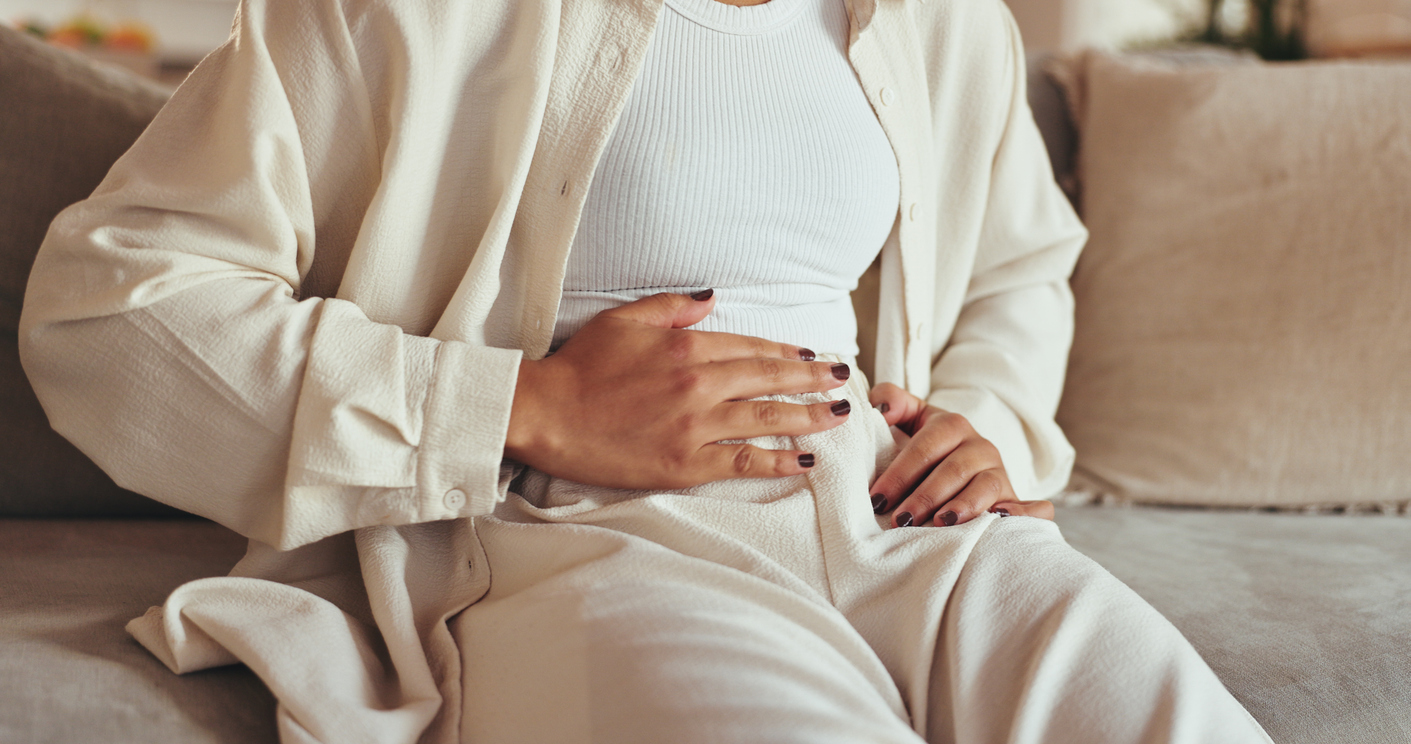
If you’ve ever curled up with a heating pad, canceled plans because of your period, or been told that “cramps are just part of being a woman,” this one’s for you.
Endometriosis affects roughly 1 in 10 women and girls of reproductive age, which works out to about 190 million people worldwide. Yet it remains one of the most misunderstood conditions in women’s health. Many women live with symptoms for years before anyone puts a name to them, and some only find out they have it when they start trying to get pregnant.
At ACRM, endometriosis is one of the most common diagnoses we see. So we’ve refreshed our guide with what you need to know in 2026: what endometriosis is, the signs worth paying attention to, the newest research, and what it means for your fertility treatment.
What is Endometriosis?
Endometriosis happens when tissue similar to the lining of your uterus (the endometrium) grows outside the uterus. It most often shows up on the ovaries, the fallopian tubes, the outer surface of the uterus, and the lining of the pelvis. Less often, it can reach the bowel, bladder, or even farther.
Here’s the frustrating part. That tissue behaves a lot like your uterine lining. It responds to your monthly hormones, swells, and bleeds. But unlike your period, it has nowhere to go. The result is inflammation, pain, and over time, scar tissue (adhesions) that can bind organs together.
The Four Stages of Endometriosis
The most widely used system, from the American Society of Reproductive Medicine (ASRM), sorts endometriosis into four stages. A surgeon assigns the stage during a laparoscopy based on how many implants there are, how deep they go, whether cysts have formed on the ovaries, and how much scar tissue is present.
- Stage I (Minimal): A few small, shallow implants on the lining of the pelvis or the surface of organs, with little or no scar tissue
- Stage II (Mild): More implants than Stage I, some reaching a bit deeper into tissue, with minimal scar tissue
- Stage III (Moderate): Many deep implants, often with small endometriomas on one or both ovaries and some filmy adhesions
- Stage IV (Severe): Widespread deep implants, large endometriomas, and dense adhesions that can bind the ovaries, fallopian tubes, uterus, and sometimes the bowel together
The specific stage doesn’t measure pain. Someone with Stage I can be in significant pain, while someone with Stage IV may have very few symptoms at all. Stage is more useful for understanding the physical changes in your pelvis, which is why higher stages tend to be more closely linked to fertility challenges.
What Causes Endometriosis?
As ACRM’s Dr. Cecil Long explains, one long-standing theory is retrograde menstruation, where menstrual flow travels backward through the fallopian tubes. “Cells within the menstrual flow can set up micrographs behind the uterus, on the ovaries, and on the fallopian tubes causing cytotoxic reactions and even leading to adhesive bands that restrict the fallopian tube from having complete access to the ovaries on either side.”
Retrograde menstruation is only part of the story, though. Most women experience some backward flow, and most don’t develop endometriosis. Researchers now believe genetics, the immune system, hormones, and inflammation all play a role. If your mother or sister has endometriosis, your own risk is higher.
Signs You May Be Struggling With Endometriosis
Endometriosis doesn’t look the same in everyone, which is one reason it’s so easy to miss. Still, there are patterns worth paying attention to. You may want to talk to a doctor if any of these sound familiar:
- Periods that stop your life. Some cramping is normal. Pain that keeps you home from work or school, or that over-the-counter pain relievers barely touch, is not.
- Pelvic pain outside your period. Dr. Long notes that some patients feel “pelvic pain throughout the menstrual cycle,” not just around menstruation.
- Pain during or after sex. Deep pain with intercourse (dyspareunia) is a common and often unspoken symptom.
- Painful bowel movements or urination, especially during your period.
- Heavy or irregular bleeding, including spotting between periods.
- Endo belly. Many women describe significant bloating that makes them look several months pregnant.
- Digestive trouble like constipation, diarrhea, or nausea that flares with your cycle.
- Fatigue that doesn’t improve with rest.
- Difficulty getting pregnant. Sometimes the only symptom of endometriosis is simply the inability to conceive.
One simple tip: start a symptom diary. Track your pain, bleeding, energy levels, and digestion alongside your cycle for two or three months. Patterns that feel vague in the moment become much clearer on paper, and that record can make your next appointment far more productive.
Why is an Endometriosis Diagnosis Often Missed?
On average, it takes 7 to 10 years from the first symptoms to an endometriosis diagnosis. That’s a decade of missed workdays, dismissed concerns, and wondering if it’s all in your head. (It isn’t.)
Part of the delay is cultural: period pain has long been normalized, and many women are taught to push through it. Part of it is medical: Endometriosis symptoms overlap with IBS, ovarian cysts, pelvic inflammatory disease, and other conditions. And the most common type, superficial endometriosis, usually doesn’t show up on a standard ultrasound or MRI.
What’s New In Endometriosis Research in 2026
For a condition that’s been underfunded for decades, 2026 has been a genuinely encouraging year. Much of the newest research focuses on the biggest frustration for patients: how long it takes to get diagnosed. While all these new advancements are exciting, none of the tests listed below are available at your doctor’s office yet. Each needs larger studies before it becomes routine care. But together, they signal real momentum toward faster, less invasive diagnosis.
Want to dig deeper? Here are the studies making great strides:
- A blood test for early endometriosis in teens and young adults
- A scan that makes endometriosis “light up” without surgery
- The largest genetic study of endometriosis to date
- A hormone “fingerprint” that could lead to a blood test
- Why endometriosis may be “many diseases,” not one
How is Endometriosis Treated?
There’s no cure for endometriosis yet, but there are effective ways to manage it. The right plan depends on your symptoms, your age, and whether you’re trying to get pregnant now or in the future.
Pain Relief
Anti-inflammatory medications like ibuprofen can ease mild to moderate pain.
Hormonal Therapy
Birth control pills, progestin-only options, hormonal IUDs, and GnRH medications work by calming the hormone cycle that fuels endo. These can bring real relief, but they also prevent pregnancy while you’re taking them.
Surgery
During a laparoscopy, a surgeon can remove or destroy endometriosis tissue and free up adhesions. For some women, surgery both relieves pain and improves the odds of conceiving naturally.
Fertility Treatment
When pregnancy is the goal, options range from ovulation medications paired with intrauterine insemination (IUI) to in vitro fertilization (IVF). IVF is often the most effective path for women with moderate to severe endometriosis, since it bypasses the fallopian tubes entirely.
Endometriosis and Fertility: What You Should Know
Let’s start with the most important message: many women with endometriosis get pregnant, some without any help at all. Still, endometriosis is closely tied to fertility challenges. Somewhere between 30% and 50% of women with endometriosis have trouble conceiving.
How Endometriosis Affects Conception
There are a few reasons why. Adhesions can block or distort the fallopian tubes, making it harder for the egg and sperm to meet. Endometriomas can affect the ovaries and, over time, your egg supply. And the inflammation itself creates a less welcoming environment for conception.
Dr. Long compares it to a splinter: “Endometriosis causes immunologic type reactions similar to having a foreign body in your skin like a splinter. So, over time, the body tries to corral and get rid of the ‘splinter.'” Those reactions, he explains, “can affect the sperm, the egg, or the embryo.”
Steps to Protect Your Fertility
If you have endometriosis and are hoping to grow your family, a few steps can help:
- Don’t wait too long to ask for help. If you’ve been trying to conceive and haven’t had any luck, it’s time to see a fertility specialist. With known endometriosis, it’s reasonable to come in sooner.
- Ask about your ovarian reserve. A simple blood test (AMH) and ultrasound can show how many eggs you have, which guides your timeline.
- Consider your options for the future. If you aren’t ready for pregnancy yet, egg freezing (cryopreservation) can be a smart way to protect your fertility, especially if surgery on your ovaries is planned.
You Don’t Have to Figure It Out Alone
Endometriosis can feel isolating, but you’re far from alone, and the outlook is brighter than ever. Research is moving quickly, treatment options are expanding, and many women with endometriosis go on to have healthy pregnancies.
The Team at ACRM is Always Ready to Talk About Fertility
If you think you may have endometriosis, or you’ve already been diagnosed and want to talk about your fertility, the team at ACRM is here to help. Dr. Cecil Long sees patients in Birmingham and Montgomery. Schedule a consultation. We’d love to help you take the next step in your journey.