
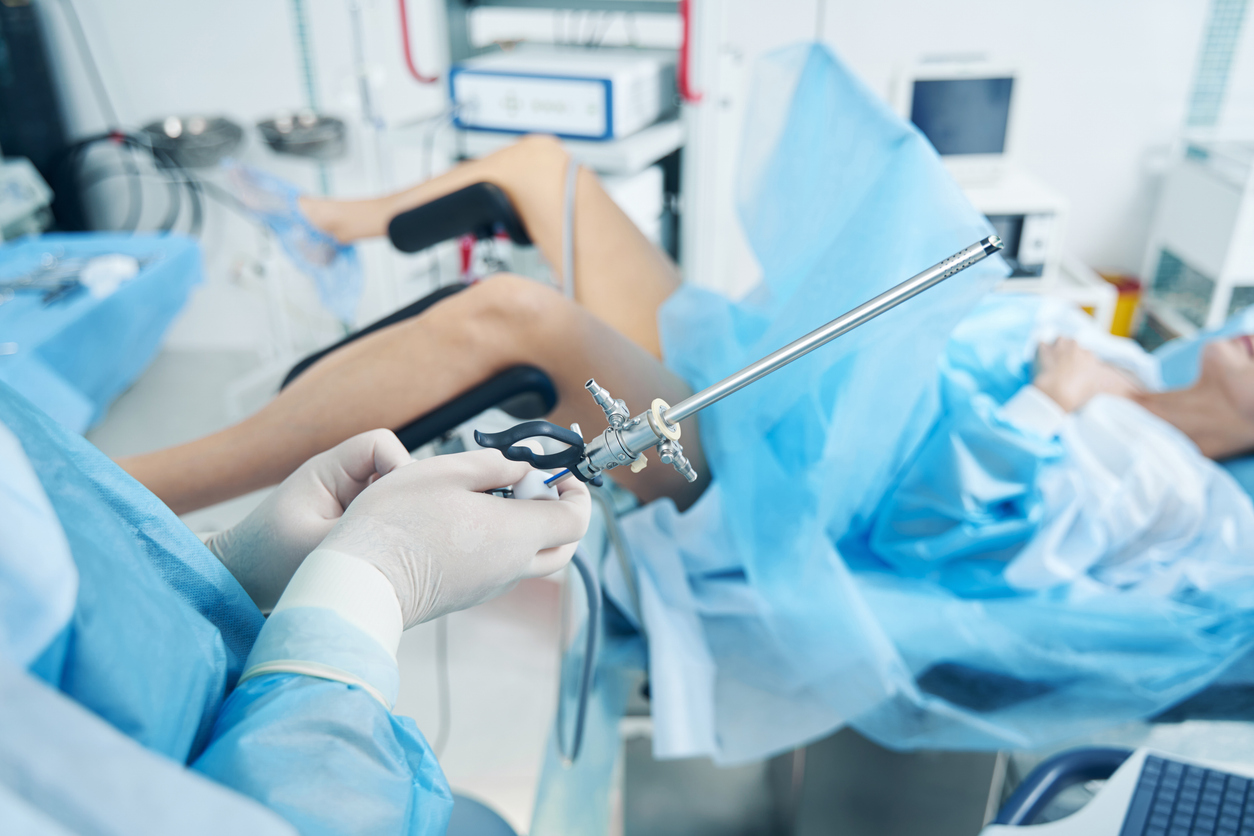
If you’ve spent any time on the fertility journey, you already know it comes with its own language. Between AMH levels, follicle counts, and IUI versus IVF, it’s easy to feel like you need a medical degree just to keep up with your own care. So when your doctor mentions that you might need a laparoscopy, or maybe it was a hysteroscopy, it’s completely fair to wonder: wait, which reproductive surgery was that again?
You’re not alone in mixing them up. The names sound similar, they’re both performed by a reproductive surgeon, and both can play a pivotal role in figuring out what’s standing between you and a healthy pregnancy. But they’re not interchangeable, and understanding the difference can make the whole process feel a lot less intimidating.
The Short Version: Where Each Procedure Looks
Here’s the easiest way to keep them straight: think about where the camera goes.
A hysteroscopy looks inside the uterus. A laparoscopy looks outside the uterus, at the broader pelvic and abdominal cavity, including the ovaries, fallopian tubes, and the outer surface of the uterus itself.
Same neighborhood, different rooms. And because fertility issues can originate in either space, many patients end up needing information from both procedures.
What is a Hysteroscopy?
A hysteroscopy is a procedure that allows your doctor to examine the inside of your uterine cavity using a thin, lighted scope called a hysteroscope. The scope is gently guided through the vagina and cervix — no incisions required — and a camera transmits real-time images of the uterine lining to a screen.
Because there’s no cutting involved, a diagnostic hysteroscopy is often done right in the office. If your doctor finds something that needs to be addressed, a slightly more involved operative hysteroscopy can treat many issues in that same procedure.
Why Would a Hysteroscopy Be Recommended?
- Investigating recurrent miscarriage or unexplained infertility
- Evaluating abnormal or unusual uterine bleeding
- Identifying uterine fibroids, polyps, or scar tissue (adhesions)
- Assessing a uterine septum or other congenital differences in uterine shape
- Removing a misplaced IUD
- Following up on abnormal findings from an ultrasound or saline sonogram
What to Expect During a Hysteroscopy
Most hysteroscopies are outpatient procedures, and many are completed in under 30 minutes. Depending on whether it’s diagnostic or operative, you may be awake with light sedation or under general anesthesia. Afterward, it’s common to experience mild cramping or light spotting for a day or two, and most patients return to normal activities within a day.
What is a Laparoscopy?
A laparoscopy takes a broader view. Instead of entering through the cervix, your surgeon makes a few small incisions in the abdomen — usually toward the belly button — and inserts a laparoscope (a scope with a camera and a light source). The abdomen is gently inflated with carbon dioxide to create space, giving your surgeon a magnified view of the ovaries, fallopian tubes, uterus, and surrounding pelvic structures.
This procedure is done under general anesthesia in an operating room, and it allows your doctor to diagnose and treat conditions in the same setting.
Why Would My Doctor Recommend a Laparoscopy?
- Diagnosing or treating endometriosis
- Evaluating or removing ovarian cysts
- Assessing blocked or damaged fallopian tubes
- Addressing pelvic adhesions or scar tissue from prior surgery or infection
- Investigating unexplained pelvic pain alongside infertility
- Removing fibroids located on the outer uterine wall
What to Expect During a Laparoscopy Procedure
Because laparoscopy is a surgical procedure involving general anesthesia, recovery takes a bit more patience than a hysteroscopy. Most patients go home the same day, though some soreness, bloating, or shoulder pain (from the gas used during surgery) is normal for a few days afterward.
Many people feel back to themselves within a week, though your care team will give you a recovery timeline specific to what was found and treated during your procedure.
Why the Distinction Matters For Your Fertility Journey
It’s not just semantics; where a fertility issue is located genuinely changes how it’s treated. A polyp inside the uterine cavity might quietly interfere with implantation, while endometriosis on the ovaries might be affecting egg quality or blocking a fallopian tube entirely. One procedure can’t see into the other’s territory.
That’s why your fertility specialist may recommend one, the other, or both, depending on your symptoms, history, and what earlier testing has already suggested. Sometimes these procedures are diagnostic tools to understand what’s happening. Other times, they’re the treatment itself, clearing the way for a more successful pregnancy, whether that’s conceived naturally or through in vitro fertilization (IVF).
Frequently Asked Questions
How do I prepare for a hysteroscopy or laparoscopy?
Preparation looks a little different for each. A hysteroscopy is often scheduled for the week right after your period ends and before ovulation. This is because the uterine lining is thinnest and easiest to evaluate at that point.
A laparoscopy will require you to fast for several hours beforehand and to arrange a ride home, since it’s conducted under general anesthesia. Your care team will also let you know if any medications, like blood thinners or anti-inflammatories, need to be paused in the days leading up to surgery.
Are these procedures safe? What are the risks?
Both are considered safe, routine procedures with low complication rates, but as with any medical procedure, there are risks worth knowing about. Hysteroscopy carries a small risk of infection, bleeding, or, rarely, injury to the uterus.
Laparoscopy carries similar risks along with a small chance of injury to nearby organs or blood vessels, given its access point in the abdomen. Your surgeon will walk you through the specific risks based on your health history before you consent to either procedure.
When will I get my results, and who explains them to me?
For many diagnostic procedures, your surgeon can share initial findings with you the same day, right after the procedure, once you’re awake and alert. If tissue was removed for biopsy — a polyp or suspicious lining — those lab results take one to two weeks. Your fertility team will schedule a follow-up conversation to walk through what was found and what it means for your treatment plan. You’ll never be left interpreting results on your own.
How soon can I try to conceive, or move on to my next treatment step, afterward?
This depends entirely on what was found and treated. Some patients are cleared to try naturally or begin IUI within one to two menstrual cycles. Others, particularly after more involved laparoscopic surgery, may need a bit more healing time before moving to IVF or another next step.
Your doctor will give you a personalized timeline based on your specific procedure and findings.
Will my insurance cover these procedures?
Coverage varies by provider and by the reason for the procedure; diagnostic versus treatment-related, for instance. Our team can help you understand what your specific plan covers and what to expect financially before your procedure is scheduled.
How Alabama Center for Reproductive Medicine Can Help
If your doctor has recommended a laparoscopy, a hysteroscopy, or both, that’s not a sign that something is dramatically wrong. It’s a sign that your care team wants a clearer, more complete picture so they can build the right plan for you.
At ACRM, our reproductive surgeons perform these procedures every day, and we understand that the technical details are only part of the story. We take the time to explain exactly what we’re looking for, why a particular procedure is being recommended, and how the findings will shape your next steps.
Because our surgical team works closely with your broader fertility care team, nothing gets lost in translation between diagnosis and treatment. The same specialists who perform your procedure are involved in interpreting your results and planning what comes next, so you’re never starting over with someone new.
Let’s Talk About Your Reproductive Surgery Options
We know that surgery, even routine surgery, can bring up a lot of feelings when you’re already deep in a fertility journey. Our team is here to answer every question, however small it may seem, and to make sure you feel informed and supported every step of the way.
If you have questions about which procedure might be right for your situation, we’re happy to discuss it. Schedule a consultation with our fertility specialists today.