
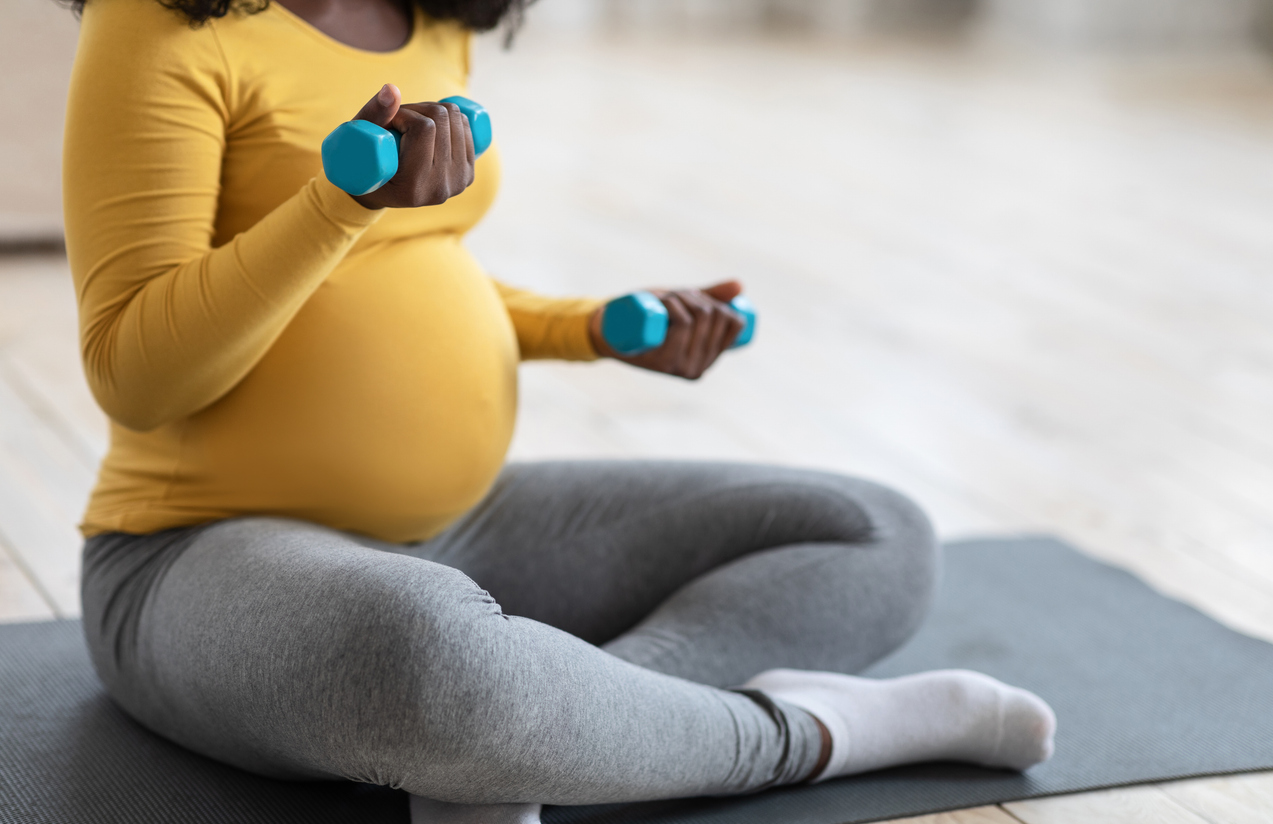
Pregnancy in a Southern summer is basically nature’s cruelest joke. Your body is already running its own personal marathon 24/7 — growing a human, expanding your blood volume, rearranging your organs — and then Alabama decides to add a heat index of 105℉ on top of it. Add “go exercise” to that to-do list, and you might be tempted to close the app, lie in front of a fan, and call it a day.
We get it. But here’s the good news: staying active during pregnancy isn’t about pushing through misery. It’s about finding the right kind of movement for where you are right now. So let’s talk about what works, what to skip, and how to keep moving without melting into a puddle on your driveway.
Quick Recap, If You’re Short On Time
- Moderate exercise is safe for most pregnancies and offers a lower risk of gestational diabetes, less back pain, and easier labor
- If you were already active before pregnancy, you can keep a similar routine with small tweaks
- High-risk pregnancies require doctor approval before following any workout plan
- What’s safe and how much you can exercise while pregnant shifts by trimester
- Prenatal yoga, Pilates, walking, swimming, and light strength training are all solid workout options
Wait, Is Exercise During Pregnancy Even Safe?
Short answer: yes, for most pregnancies. The American College of Obstetricians and Gynecologists (ACOG) recommends that pregnant women without complications aim for about 150 minutes of moderate, regular physical activity a week (20-30 minutes a day). That doesn’t mean, however, that you need to become a marathoner overnight.
Moderate movement during pregnancy has been linked to:
- Lower risk of gestational diabetes
- Reduced chance of needing a C-section
- Better mood and sleep (hello, third-trimester insomnia relief)
- Less back pain and swelling
- A stronger body that’s better prepared for labor
- Support for an overall healthy pregnancy, both for you and your baby
Is Exercise Safe When You’re High-Risk or Carrying Multiples?
This one matters a lot for our patients, since fertility treatment pregnancies are more likely to involve twins and sometimes come with a higher-risk label attached. If that’s you, a general 150 minutes a week guidance doesn’t automatically apply the same way.
That doesn’t mean you’re benched for nine months, but it does mean your exercise plan should be built with your care team, rather than pulled from a blog (even this one).
- Gentle, low-impact movement is still encouraged. Walking or swimming are the most common, unless your doctor told you otherwise.
- Intensity comes down a notch sooner than a single, low-risk pregnancy, especially heading into the third trimester.
- Certain conditions call for modified or no exercise, including things like preterm labor risk, cervical insufficiency, or significant bleeding.
- Check-ins happen more often. If you’re high-risk, your care team will likely want more frequent updates on how activity is affecting you.
If you have a high-risk pregnancy, placenta previa, preeclampsia, high blood pressure, or other health conditions your doctor has flagged, this article isn’t a substitute for that conversation. Always run your workout plans by your OB or fertility specialist first.
Were You Already Active? Your Rules Are a Little Different
Working out while pregnant looks different depending on where you started. If you were running five miles a day, teaching spin classes, or deadlifting at the gym before you got pregnant, pregnancy doesn’t mean you have to suddenly downgrade to a stroll around the block. Your cardiovascular system and muscles are already conditioned for that workload, and ACOG guidance generally supports continuing at a similar intensity, with some tweaks.
So what does tweaking some things look like for the already-fit crowd?
- Dial back the intensity, not the activity. Still running? Great! Just consider trading some high-intensity intervals for steadier-paced miles.
- Watch the “talk test,” not just your usual pace. If your normal 8-minute mile now leaves you breathless and unable to chat, that’s your body’s cue to ease up.
- Skip moves that need serious balance or core stability. Think heavy overhead lifts, box jumps, or anything where a fall would be a real problem.
- Expect performance changes. Loosening ligaments and a shifting center of gravity mean your usual PRs might take a back seat for a while.
Being fit before pregnancy is an advantage, not something you need to put on pause. You’re just training the push harder mentality for a listen closer to your body one.
How Workouts Change From Trimester to Trimester
Pregnancy isn’t one static state for nine months. What feels good in month two might feel awful in month eight, and that’s completely normal.
First Trimester
This is often the roughest stretch for exercise, ironically because you might not look pregnant yet while feeling exhausted and nauseous. Fatigue and morning sickness can make even a short walk feel like a lot. This is a great time to lower intensity and let your energy levels lead.
Second Trimester
Many women call this the sweet spot; nausea fades, energy comes back, and your bump isn’t big enough to throw off your balance. This is often the best window to maintain a solid, consistent routine.
It’s also when doctors advise moving away from exercises done flat on your back, as your growing uterus can start to compress a major vein in that position.
Third Trimester
Your center of gravity has shifted, your joints are looser thanks to the hormone relaxin, and things like pelvic pressure, swelling, and shortness of breath become more common.
This is the time to lean into lower-impact, more stable options like walking, swimming, and prenatal yoga. Braxton Hicks contractions during or after exercise are usually harmless, but frequent or painful contractions are worth a call to your doctor.
Exercises That Pair Well With Pregnancy
Forget no pain, no gain. Pregnancy fitness is about steady, sustainable movement. Here’s a rundown of some of the safe exercises during pregnancy that tend to make the cut.
Prenatal Yoga
This one’s basically made for pregnancy. It builds flexibility, eases hip and lower back pain, and teaches breathing techniques you’ll be very grateful for during contractions. Just look for a class labeled “prenatal” specifically; regular yoga classes can include deep twists, hot room settings, or backbends that aren’t ideal once you’re expecting.
Pilates
Pilates is fantastic for your core and pelvic floor, two things that take a beating during pregnancy and recovery. Prenatal pilates instructors know to skip moves that involve lying flat on your back for long stretches after the first trimester, since that position can restrict blood flow as your bump grows.
Walking
Boring? Maybe. Effective? Absolutely. Walking is low-impact, easy to control the intensity of, and something you can do right up until delivery day. Some would even argue that walking might help nudge things along near your due date.
Swimming and Water Aerobics
If there was ever a summer MVP, it’s the pool. Water supports your growing belly, takes pressure off your joints, and keeps you cool when the Alabama heat is doing its worst. Many women find this is the most comfortable form of exercise in the third trimester.
Stationary Cycling
Unlike outdoor biking, a stationary bike removes the risk of losing your balance (your center of gravity is doing new things, after all) while still giving you a solid cardio session.
Low-Impact Dance Classes
Barre, prenatal dance cardio, even just dancing around your living room to your favorite playlist counts. These classes keep your heart rate up and are a great mood booster if the summer heat has you feeling sluggish and cooped up.
Don’t Skip the Pelvic Floor Exercises
Your core gets a lot of attention during pregnancy, but the pelvic floor — the sling of muscles supporting your bladder, uterus, and bowels — deserves its own spotlight. All that extra weight and pressure from pregnancy puts strain on these muscles, and a weakened pelvic floor is linked to things like urinary incontinence (that unwelcome cough-and-leak combo).
The good news is that this is one of the easier things to work on. Kegel exercises, gentle pelvic tilts, and prenatal yoga or Pilates classes can cue pelvic floor engagement. A strong pelvic floor is linked to easier pushing during labor and a smoother physical recovery afterward. If you’re dealing with pelvic pain or notice ongoing leaking, a pelvic floor physical therapist can be a great resource; ask your OB or fertility specialist for a referral.
Surviving Summer Workouts Without Overheating
This is the part where Alabama really tests you. A few practical tricks include:
- Workout during the coolest parts of the day: Early morning or right after sunset, instead of high noon
- Move your routine indoors: On the worst heat-index days, air-conditioned spaces are the best option
- Hydrate before, during, and after: Pregnant bodies need more fluids than usual, and dehydration combined with heat is a fast track to feeling dizzy or worse
- Dress for the heat: Breathable, moisture-wicking fabrics and a hat go a long way
- Watch for warning signs: Dizziness, chest pain, contractions, fluid leaking, or decreased fetal movement mean it’s time to stop and call your doctor
Your Move, Mama-to-Be
There’s no gold medal for gritting your teeth through a workout that makes you miserable, and there’s no penalty for swapping your usual 5K for a slow lap in the pool. Pregnancy isn’t the time to prove anything to anyone. It’s the time to figure out what feels good today, and let that be enough.
Maybe that’s a prenatal yoga class where you finally nail child’s pose without your bump getting in the way. Maybe it’s a stroll around the block at 7 a.m. before the humidity has a chance to ruin your morning. Perhaps it’s a dance party in your kitchen with your favorite playlist and zero choreography required. All of it counts. All of it matters. And on the days you skip it entirely? That counts too; growing a human is already a full-time job.
Get Active With Help From ACRM
If you’re navigating pregnancy after fertility treatment, or you have questions about what’s safe for your specific situation, our team at ACRM is here to assist. Schedule an in-person consultation at our Homewood or Montgomery location or call us directly to build a plan that keeps you moving safely all summer long.